
What a Technician Sees After a Wind Event
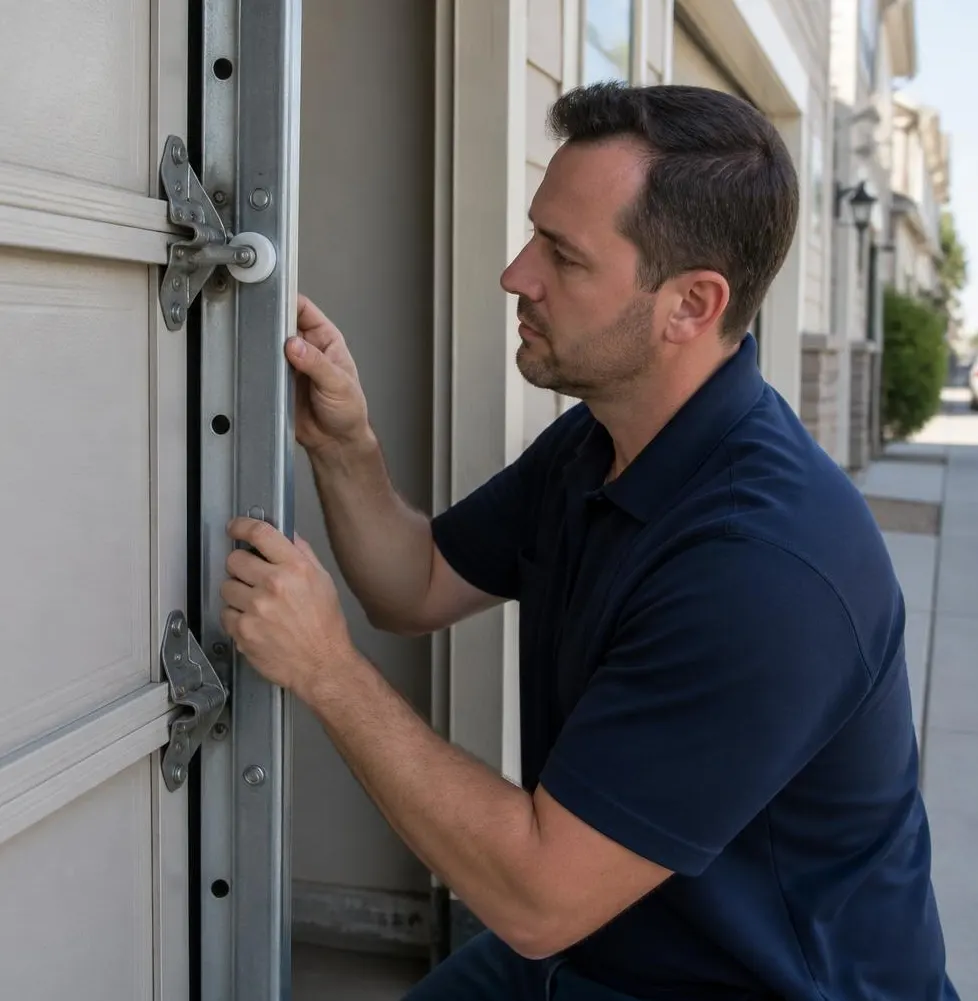
The call usually comes the morning after a hard overnight blow. The homeowner says the door 'just popped open' or 'bowed in the middle' during the wind. On arrival, the pattern is familiar: the top section is bowed outward or inward a couple of inches, a handful of rollers have jumped the track, and the track itself is bent at the spot where the door flexed the most. Sometimes a panel has cracked where it folded under pressure. In the worst cases, the whole door has come off the track and is leaning into the garage, with the opener's trolley still clamped onto the arm, straining against a door it can no longer control.
None of this is unusual for this part of Illinois. Wind that would barely rattle a window can do real damage to a garage door, because the door isn't built the same way the rest of the house is.
Why the Garage Door Is the Weakest Wall in the House
A standard residential garage door opening is the largest unsupported gap in most homes, often 16 feet wide or close to it. Every other wall in the house has studs, sheathing, and a continuous surface tying it together. A garage door is a series of hinged panels riding in a thin metal track, held in place by rollers, hinges, and a handful of brackets. It's designed to move, which means it's inherently less rigid than a wall that's designed to simply stand there.
When straight-line wind or a sudden gust front hits the broad flat face of a garage door, it can flex the panels, pop rollers out of the track, or in extreme cases push the door in or suck it out hard enough to separate it from the opener and tracks entirely. Once a garage door fails and wind gets inside the structure, pressure can build under the roof deck, which is part of why older homes with single-layer, non-reinforced doors are more vulnerable during severe weather than homes with reinforced or impact-rated doors.
Signs Your Door Won't Hold Up in the Next Storm
- Visible gaps or daylight around the top or sides when the door is closed, usually from worn weatherstripping or a door that's slightly out of square.
- Thin, unreinforced steel skins with no horizontal struts on the back of the panels — common on older or lower-end doors.
- Single-layer tracks that flex visibly when you push on the door from inside.
- Worn or cracked rollers that no longer sit flush in the track.
- Hinges with elongated holes or loose screws, which let the panels shift under pressure.
- An opener with no battery backup, which matters most during the power outages that often come with these storms.
A Fall Storm Prep Checklist
Late fall in this area tends to bring a run of wind events before winter settles in — the kind of system that knocks out power, sends branches down, and tests every weak point on a house. Before the next one rolls through:
- Inspect the tracks for dents, rust, or spots where they've pulled away from the wall. Even a small gap between track and bracket can let the door jump off during a hard gust.
- Tighten all hardware — hinge bolts, roller brackets, and the lag screws holding the track to the framing. Vibration and temperature swings loosen these over a season.
- Check the bottom weatherstripping and side seals for cracking or gaps. Worn seals let wind-driven rain in now and let cold air and road salt spray in once winter arrives.
- Test the auto-reverse safety feature by placing a piece of wood in the door's path and closing it — it should reverse on contact. If it doesn't, that's a safety issue, not just a maintenance one.
- Run a balance test: disconnect the opener, lift the door halfway by hand, and let go. It should stay put. If it drifts up or drops down, the springs are no longer carrying their share of the weight, which puts more stress on the panels and opener during high wind.
- Ask about reinforcement options if your current door is older and unreinforced — horizontal strut kits added to the back of the panels, or upgrading to a door built for higher wind resistance, both reduce the chance of a bowed or blown-in door.
What Comes Next: Getting the Door Ready for Winter
Once the wind events taper off, the next stretch brings the cold, ice, and road salt this area is known for. Springs get stiffer and more brittle in low temperatures, which is exactly when a spring that's already fatigued from years of use is most likely to snap. Salt spray tracked in on tires accelerates corrosion on tracks and hardware. And the freeze-thaw cycle on the concrete apron outside the door can shift the slab slightly, throwing off the door's alignment at the bottom. A door that's freshly lubricated, properly balanced, and sealed tight heading into winter holds up far better through both the wind and the cold than one that's neglected through the fall.
When to Call Lake Villa Garage Door
If a storm has already bowed your door, knocked it off the track, or cracked a panel, that's a job for emergency garage door service — not something to leave open and unsecured until the weekend. If the door is intact but the test balance feels off, the rollers are worn, or the springs are more than several years old, that's the time for garage door maintenance or spring replacement before winter pushes a weak spring past its limit. We'll check the hardware, the track alignment, the seals, and the balance, and tell you honestly what needs attention now versus what can wait.
If you're in Lake Villa, Lindenhurst, Round Lake, Grayslake, Antioch, Fox Lake, Mundelein, or Wauconda and want your garage door storm-ready before the next wind event rolls through, call Lake Villa Garage Door today to get it inspected and reinforced.